The purchase is decided in the aisle.
Unit
BRAVA Retail Labs
Markets
Central America · Mexico · United States
Everything upstream of the shelf is a hypothesis. Positioning, campaigns, narrative and media all get tested in the same three seconds by a shopper who has no interest in your brand architecture. BRAVA Retail Labs exists for that moment. The unit treats trade as an intelligence layer, not as a production budget, which means the decisions about where a brand shows up, at what level, against which competitor and in what condition come before anything gets manufactured. Most companies buy displays and call it trade marketing. Production is what happens after the decisions are made correctly.
Scope of Work

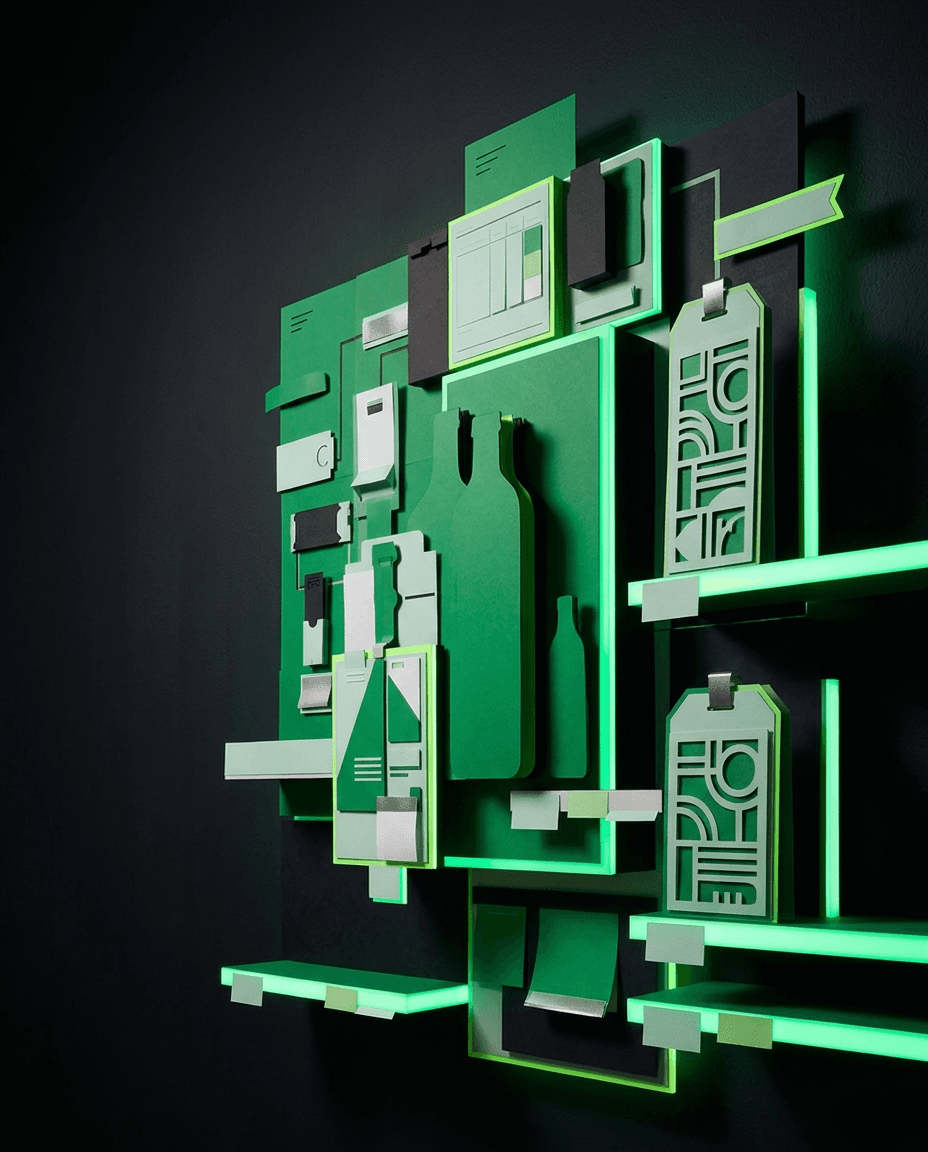
The shelf is the only honest audit.
Point-of-sale intelligence starts in the store, in person, on a Saturday. Sell-in is not presence: product sitting in a back room is revenue on your books and invisible to the shopper. Shelf position decays quietly as category managers reset and competitors renegotiate, so the position you paid for eighteen months ago is rarely the position you hold today. What a field report shows is a display in the state it was built. What matters is the state it is in during week three.

Not every store deserves the same investment.
Trade marketing strategy begins with a store ranking built on rotation, category weight and competitive intensity, because allocating material evenly across a channel is administratively simpler and commercially wrong. A convenience store, a supermarket and a wholesaler involve different decisions, different competitors and different time pressure. Identical material across all three is optimized for none of them, and the budget gets spread until nothing lands anywhere with force.


Four seconds, one job.
Packaging and point-of-sale design get reviewed at thirty centimeters under good light and get judged at two meters, at an angle, next to eleven competitors, under fluorescent lighting, by someone holding a phone. Material that tries to communicate three things communicates none. We design against the single decision the shopper is making in that format, which usually means removing most of what the brand team wanted to include and defending the removal with what the aisle actually shows.

Price is set in a spreadsheet. Meaning is set on the shelf.
Shelf and visibility management covers what sits beside you and what comparison that invites. Premium positioning next to a competitor priced eight percent higher does not read as premium, it reads as the value option, and no campaign corrects a message the shelf is sending. We track adjacency, facings, linear space and price context against what was negotiated, because the gap between the agreement and the reality is where category share moves without anyone reporting it.

Execution compliance is the cheapest thing to fix.
Channel execution answers a question most brands never ask: what percentage of stores actually installed what was sent. In most operations the honest number surprises everyone, and it costs almost nothing to correct compared to producing more material. A campaign that reaches sixty percent of its intended points is not a campaign that underperformed. It is a campaign that ran at sixty percent and got measured as if it ran at one hundred.

One visit is an anecdote. A cadence is intelligence.
Monitoring and continuity turn store visits into a system. The same stores, the same variables, the same recording method, month over month, so that patterns separate from noise and a stockout gets caught while it is happening rather than when the month closes. This is the difference between an executive walking an aisle and having an opinion, and a company that knows whether its strategy survives contact with the place where money changes hands.

The other three units.
Retail Labs wins where the purchase is decided. The other three decide the direction, build the attention and extend the business.


Fintech & Financial Services
Hospitality & Restaurants
Real Estate
Logistics & Distribution
Retail & Consumer
Tourism & Travel
Health & Wellness
Technology & SaaS
HR Tech
Education